
Forgotten Struggle
2011–Ongoing Series

Hands grip sticks; faces show urgency, fatigue, resolve. But the usual words are missing. What’s left is visual tension—a gap between what we see and what we think we know. In my series Forgotten Struggle, begun in 2011, I remove text from civil rights picket signs, leaving them blank. At first, something seems missing, but soon that absence changes. The signs stop communicating and start interrupting. They block, hide, and flatten the meaning. They don’t instruct you.
Because of this, viewers have to look differently.
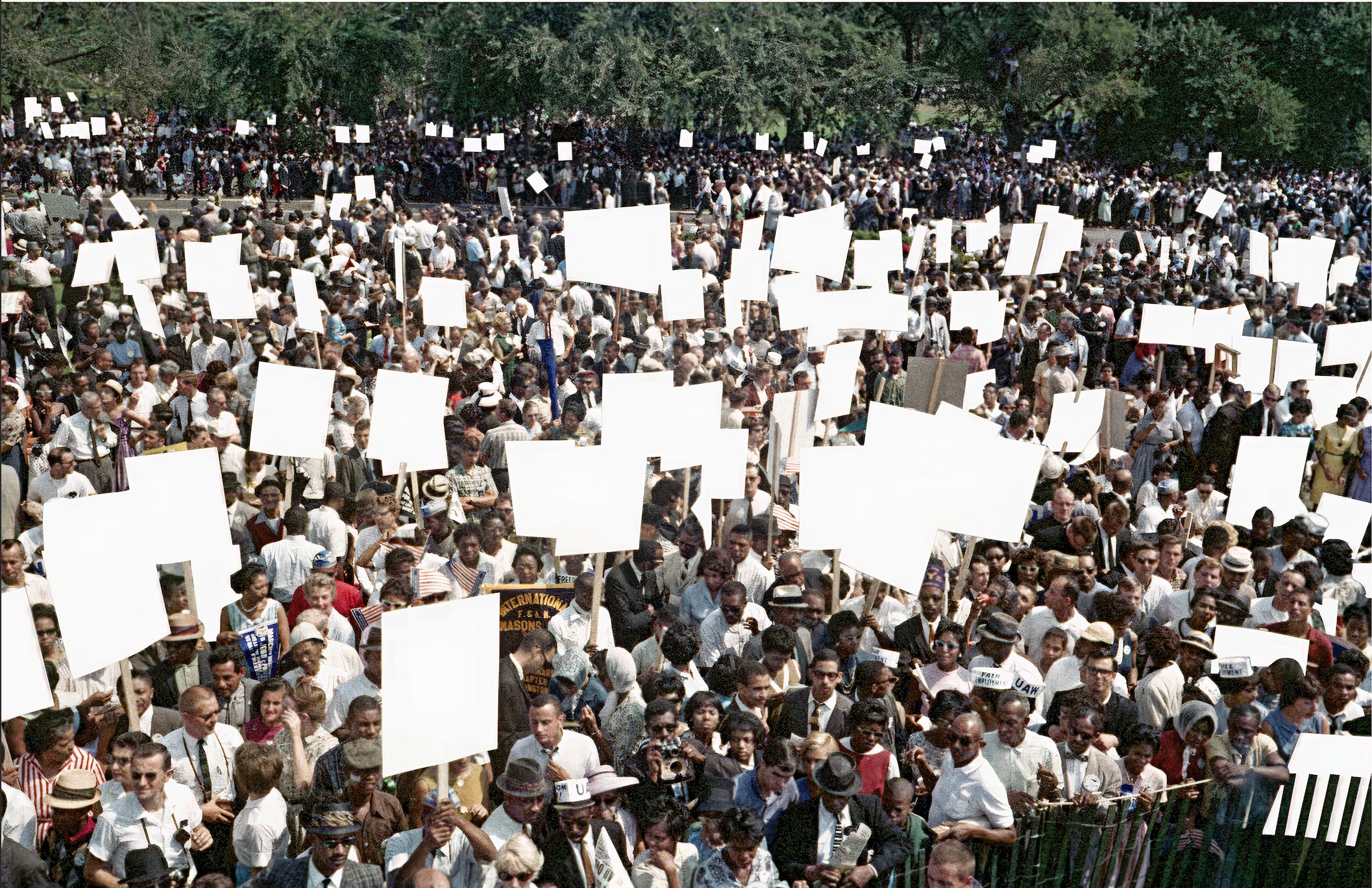
Without words, you notice how people stand. Who is close? Who looks ahead or away? You sense group size, closeness, and shared presence. The protest shifts from slogans to people coming together, seeking something no longer clearly stated.
This uncertainty is intentional.
This reflects a larger issue: how history is presented. It’s edited, narrowed, and reframed. For example, the Texas School Board released textbooks that omit or alter facts. They don’t erase everything, just enough to change our understanding. What’s left seems complete, but meaning changes.


The blank picket sign is a visual symbol of this process.
The blank sign represents what was removed. It shows absence and creates it. Viewers want to fill in words, but it’s unclear if they do. It depends on memory, education, and bias. Some think of justice; some of disorder. Some see Civil Rights history; others see nothing.
When language is gone, interpretation widens, not evenly. The danger is not just losing meaning, but replacing it. The image can be reinterpreted and detached from its historical context. The protest becomes unclear, its message caught between recognition and misunderstanding.
What interests me is that suspension, that moment when an image resists easy answers, making viewers pause before deciding what they see. In that pause, the work exists. People look closer, certainty fades. The photograph quietly holds space, as the signs do in the frame. Scale, distance, and quiet become part of the experience. The photograph doesn’t speak first. It waits.
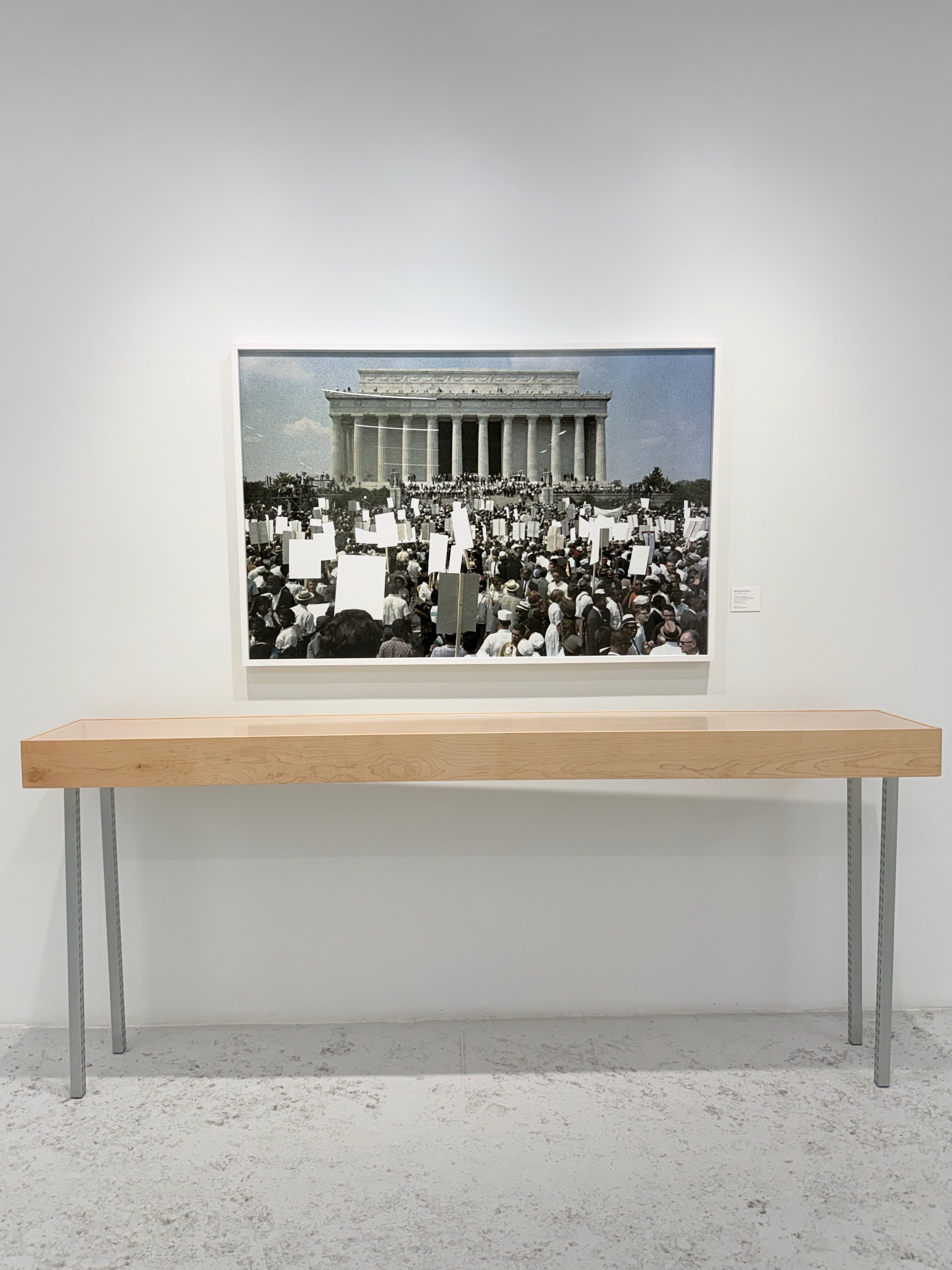
This idea comes to the forefront in its current presentation. Now at the FotoFest Biennial 2026, this body of work stands among others, each pressing us to confront what’s shown, what aches unseen, and what’s been ripped out of sight, sometimes on purpose.